How to read your tyre size
Ever looked at the side of your tyre and wondered what the numbers mean?
Tyre markings might look confusing, but they contain important information about size, load capacity and speed rating.
Understanding these numbers helps ensure you buy the correct tyres for your vehicle.
Where to find your tyre size
Your tyre size is printed on the sidewall of your tyre as a combination of numbers and letters.
For example: 205/55R16 V
Each part of that code tells you something important.
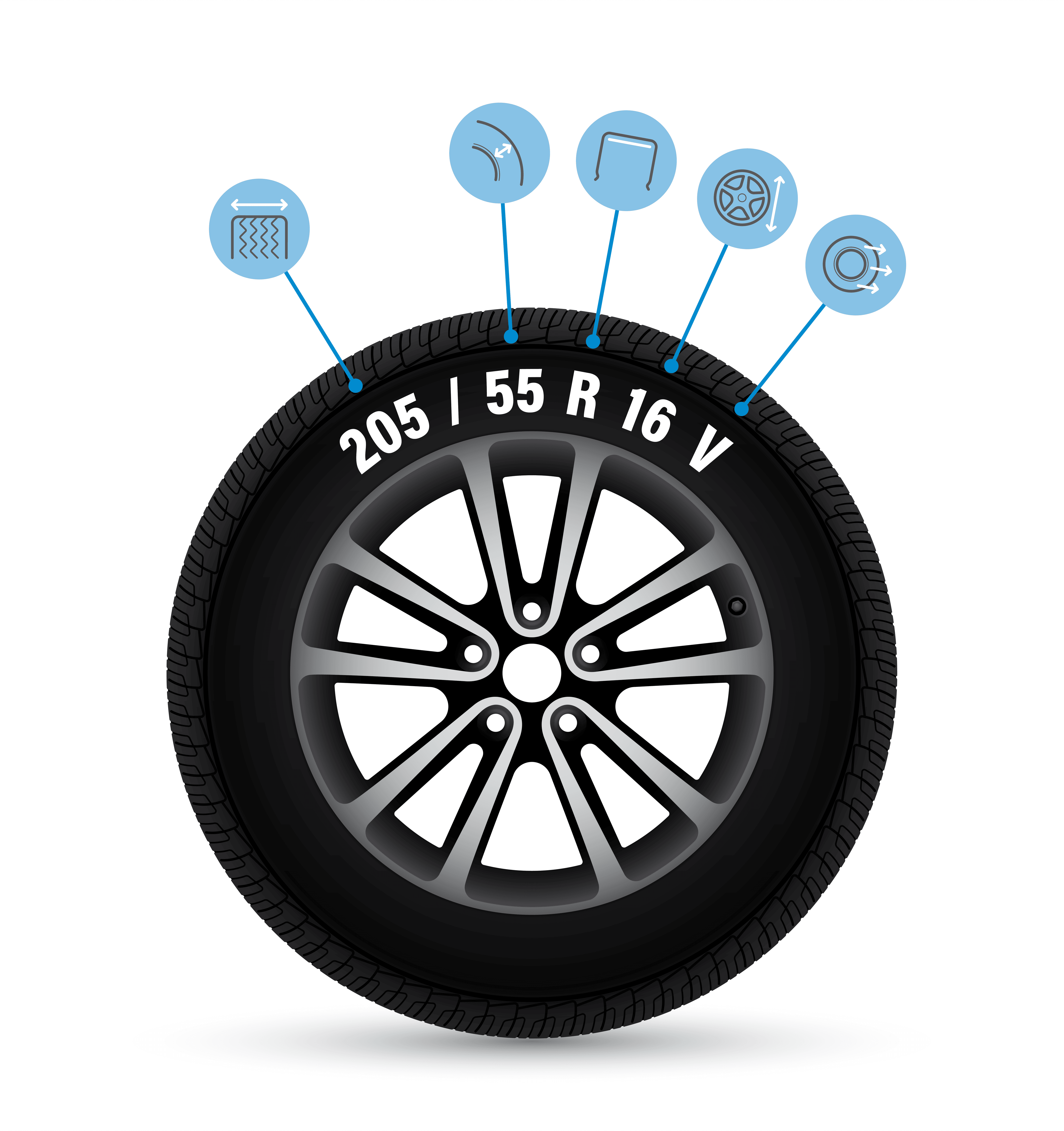

Tyre Width (205)
The first number refers to the width of the tyre in millimetres, measured from one sidewall to the other.
In this example, the tyre is 205mm wide.
Wider tyres generally provide more grip and stability.

Tyre Profile / Aspect Ratio (55)
The number after the slash represents the height of the tyre sidewall as a percentage of the width.
In this case, the sidewall height is 55% of the tyre’s width.
Lower numbers typically mean better performance handling, while higher numbers usually offer more ride comfort.

Construction Type (R)
The letter refers to the tyre’s construction.
R = Radial, which is the most common construction used on modern vehicles.
Radial tyres provide better handling, durability and ride comfort.

Wheel Diameter (16)
This number refers to the diameter of the wheel rim in inches.
It’s a critical measurement because the tyre must match the size of your wheel.

Speed Rating (V)
The speed rating shows the maximum speed the tyre is designed to handle safely.
A V rating means the tyre is rated for speeds up to 240 km/h.
Why tyre specifications matter
Using the correct tyre size recommended by your vehicle manufacturer is important because it affects:
Safety
Braking performance
Vehicle stability
Fuel efficiency
Speedometer accuracy
Incorrect tyre sizes can lead to reduced traction, uneven wear, poor handling, and increased risk of tyre failure.
If you're unsure about the right tyre size for your vehicle, our team can help.
Cambridge Tyre & Alignment
Honest Advice. Quality Tyres. Keeping You Moving.
Contact
Our Hours
We're open:
Monday to Friday 8am - 5pm
Saturday - Closed
Sunday - Closed
Payment
Payment is required on the day of service. We accept EFTPOS and credit card (a surcharge may apply), and we also offer AfterPay.
Enquire about tyres
Fill in the form below with tyre width, profile number and rim diameter (if unsure click here) and we'll come back to you.